The Relationship of Structure to Building
The simplest way of describing the function of an architectural structure is to say that it is the part of a building which resists the loads that are imposed on it. A building may be regarded as simply an envelope which encloses and subdivides space in order to create a protected environment. The surfaces which form the envelope, that is the walls, the floors and the roof of the building, are subjected to various types of loading: external surfaces are exposed to the climatic loads of snow, wind and rain;floors are subjected to the gravitational loads of the occupants and their effects; and most of the surfaces also have to carry their own weight (Fig. 1). All of these loads tend to distort the building envelope and to cause it to collapse; it is to prevent this from happening that a structure is provided. The function of a structure may be summed up, therefore, as being to supply the strength and rigidity which are required to prevent a building from collapsing. More precisely, it is the part of a building which conducts the loads which are imposed on it from the points where they arise to the ground underneath the building, where they can ultimately be resisted.

The location of the structure within a building is not always obvious because the structure can be integrated with the non-structural parts in various ways. Sometimes, a sin the simple example of an igloo (Fig. 2), in which ice blocks form a self-supporting protective dome, the structure and the space enclosing elements are one and the same thing. Sometimes the structural and space-enclosing elements are entirely separate. Avery simple example is the tepee (Fig. 3), in which the protecting envelope is a skin of fabric or hide which has insufficient rigidity to form an enclosure by itself and which is supported on a framework of timber poles.Complete separation of structure and envelope occurs here: the envelope is entirely non-structural and the poles have a purely structural function.


on a structural framework of timber poles.
The CNIT exhibition Hall in Paris (Fig. 4) is a sophisticated version of the igloo; the reinforced concrete shell which forms the main element of this enclosure is self-supporting and, therefore, structural. Separation of skin and structure occurs in the transparent walls,however, where the glass envelope is supported on a structure of mullions. The chapel by Le Corbusier at Ronchamp is a similar example. The highly sculptured walls and roof of this building are made from a combination of masonry and reinforced concrete and are self-supporting.They are at the same time the elements which define the enclosure and the structural elements which give it the ability to maintain its form and resist load. The very large ice hockey arena at Yale by Saarinen is yet another similar example. Here the building envelope consists of a network of steel cables which are suspended between three reinforced concrete arches, one in the vertical plane forming the spine of the building and two side arches almost in the horizontal plane. The composition of this building is more complex than in the previous cases because the suspended envelope can be broken down into the cable network, which has a purely structural function, and a non-structural cladding system. It might also be argued that the arches have a purely structural function and do not contribute directly to the enclosure of space.

Fig. 4. Exhibition Hall of the CNIT, Paris, France; Nicolas Esquillan, architect. The principal element is a self supporting reinforced concrete shell


Fig. 5. Modern art glass warehouse, Thamesmead, UK, 1973; Foster Associates, architects; Anthony Hunt Associates,
structural engineers. A non-structural skin of profiled metal sheeting is supported on a steel framework, which has a purely structural function.
The steel-frame warehouse by Foster Associates at Thames mead, UK (Fig. 5), is almost a direct equivalent of the tepee. The elements which form it are either purely structural or entirely non-structural because the corrugated sheet metal skin is entirely supported by the steel frame, which has a purely structural function. A similar breakdown may be seen in later buildings by the same architects, such as the Sainsbury Centre for the Visual Arts at Norwich and the warehouse and showroom for the Renault car company at Swindon.
In most buildings the relationship between the envelope and the structure is more complicated than in the above examples, and frequently this is because the interior of the building is subdivided to a greater extent by internal walls and floors. For instance, in Foster Associates’ building for Willis, Faber and Dumas, Ipswich, UK (Fig 6), the reinforced concrete structure of floor slabs and columns may be thought of as having a dual function. The columns are purely structural, although they do punctuate the interior spaces and are space-dividing elements, to some extent. The floors are both structural and space-dividing elements. Here,however, the situation is complicated by the fact that the structural floor slabs are topped by non-structural floor finishing materials and have ceilings suspended underneath them. The floor finishes and ceilings could be regarded as the true space-defining elements and the slab itself as having a purely structural function.The glass walls of the building are entirely non-structural and have a space-enclosing function only. The more recent Carré d’Art building in Nîmes (Fig. 7), also by Foster Associates, has a similar disposition of parts.As at Willis, Faber and Dumas a multi-storey reinforced concrete structure supports an external non-load bearing skin.


The Antigone building at Montpellier by Ricardo Bofill (Fig. 8) is also supported by a multi-storey reinforced concrete framework.The facade here consists of a mixture of in situ and pre-cast concrete elements, and this, like the glass walls of the Willis, Faber and Dumas building, relies on a structural framework of columns and floor slabs for support. Although this building appears to be much more solid than those with fully glazed external walls it was constructed in a similar way. The Ulm Exhibition and Assembly Building by Richard Meier (Fig. 9) is also supported by a reinforced concrete structure. Here the structural continuity and mouldability which concrete offers were exploited to create a complex juxtaposition of solid and void. The building is of the same basic type as those by Foster and Bofill however; a structural framework of reinforced concrete supports cladding elements which are non-structural.

Fig. 8. Antigone, Montpellier, France, 1983; Ricardo
Bofill, architect. This building is supported by a reinforced
concrete framework. The exterior walls are a combination
of in situ and pre-cast concrete. They carry their own weight
but rely on the interior framework for lateral support.

Fig. 9. Ulm Exhibition and Assembly Building,
Germany, 1986–93: Richard Meier & Partners, architects.
The mouldability of concrete and the structural continuity
which is a feature of this material are exploited here to
produce a complex juxtaposition of solid and void.
(Photo: E. & F. McLachlan)
In the Centre Pompidou in Paris by Piano and Rogers, a multi-storey steel framework is used to support reinforced concrete floors and non-load bearing glass walls. The breakdown of arts is straightforward (Fig. 10): identical plane-frames, consisting of long steel columns which rise through the entire height of the building supporting triangulated girders a teach floor level, are placed parallel to each other to form a rectangular plan. The concrete floors span between the triangulated girders.Additional small cast-steel girders project beyond the line of columns and are used to support stairs, escalators and servicing components positioned along the sides of the building outside the glass wall, which is attached to the frame near the columns. A system of cross-bracing on the sides of the framework prevents it from collapsing through instability.

Rogers, architects; Ove Arup & Partners, structural
engineers. The separation of structural and enclosing
functions into distinct elements is obvious here
The controlled disorder of the rooftop office extension in Vienna by Coop Himmelblau (Fig. 11) is in some respects a complete contrast to the controlled order of the Centre Pompidou. Architecturally it is quite different,expressing chaos rather than order, but structurally it is similar as the light external envelope is supported on a skeletal metal framework.

Fig. 11 Rooftop office in Vienna, Austria, 1988; Coop
Himmelblau, architects. The forms chosen here have no
structural logic and were determined with almost no
consideration for technical requirements. This approach
design is quite feasible in the present day so long as the
building is not too large
The house with masonry walls and timber floor and roof structures is a traditional form of building in most parts of the world. It is found in many forms, from the historic grand houses of the European landed aristocracy (Fig. 12) to modern homes in the UK (Figs 13 and 14).Even the simplest versions of this form of masonry and timber building (Fig. 13) are fairly complex assemblies of elements. Initial consideration could result in a straight forward breakdown of parts with the masonry walls and timber floors being regarded as having both structural and space-dividing functions and the roof as consisting of a combination of the purely supportive trusses, which are the structural elements, and the purely protective, non-structural skin. Closer examination would reveal that most of the major elements can in fact be subdivided into parts which are either purely structural or entirely non-structural. The floors,for example, normally consist of an inner core of timber joists and floor boarding, which are the structural elements, enclosed by ceiling and floor finishes. The latter are the non-structural elements which are seen to divide the space. A similar breakdown is possible for the walls and in fact very little of what is visible in the traditional house is structural, as most of the structural elements are covered by non-structural finishes.

Fig. 12. Château de Chambord, France, 1519–47. One of the grandest domestic buildings in Europe, the Château de Chambord has a load bearing masonry structure. Most of the walls are structural; the floors are either of timber or vaulted
masonry and the roof structure is of timber
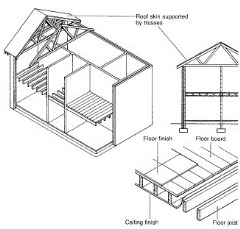
Fig. 13. Traditional construction in the
UK, in its twentieth-century form, with
load bearing masonry walls and timber
floor and roof structures. All structural
elements are enclosed in non-structural
finishing materials
To sum up, these few examples of very different building types demonstrate that all buildings contain a structure, the function of which is to support the building envelope by conducting the forces which are applied to it from the points where they arise in the building to the ground below it where they are ultimately resisted. Sometimes the structure is indistinguishable from the enclosing and space-dividing building envelope, sometimes it is entirely separate from it; most often there is a mixture of elements with structural, non-structural and combined functions. In all cases the form of the structure is very closely related to that of the building taken as a whole and the elegance with which the structure fulfils its function is something which affects the quality of the architecture.

Fig. 14. Local authority housing, Haddington, Scotland,
1974; J. A. W. Grant, architects. These buildings have
load bearing masonry walls and timber floor and roof
structures
Value Management
1. INTRODUCTION
Value management (VM), value engineering (VE) and value analysis (VA), are terms that are being used more and more frequently; but what do they mean? Most design organizations have a concern for value and have processes and design reviews to address owner requirements and the cost of any proposed scheme. Capital cost is certainly one element of value but general experience indicates that the cheapest is not always the best and a broader understanding of value is needed.
It is increasingly recognized that not only do design organizations need to provide assets that meet the owner's specification and are built to time and within budget but that the potential project maximizes the benefit to the owner's business. At the earliest stages of project thinking the owner specification is an expression of a number of perceived and/or actual 'needs'. As design proceeds and the cost of meeting those needs emerges it is often necessary to recycle the design to provide a scheme that is more acceptable to the owner. In the same way, as design proceeds, additional opportunities can be generated that could bring additional benefits to the owner's business.
It is a key role of the design organization to enter this debate of value and need at the earliest stages of design. Experience shows that 'loose discussion' and 'asking the owner what is wanted' is unlikely to be enough, and design organizations need to be able to get close to the owner, under- stand the needs and provide solutions which not only give good capital value but also enhance the business. It is this presentation of need and cost in a different form that VM techniques address. VM and associated techniques should not be seen as displacing normal design reviews but as providing a different perspective to the owner which is not apparent from the normal engineering specification and cost estimate.
2. DEFINITION OF VALUE
Value can be described as the relationship between satisfaction of need and the cost of resources required to achieve that satisfaction. This can be expressed as:
value = satisfaction of need
cost of resources
From this relationship it is clear that value can be enhanced by improving the level of satisfaction as well as reducing the resources needed. In some cases the level of satisfaction might be improved to such a degree that an increase in resources is justified. In most cases capital cost is an important resource but operating and lifecycle costs and availability of skills could figure in the equation.
It is worth recognizing that different interests in a project have different needs; for instance a factory manager could be looking for ease of maintenance while the sales manager might value a quicker order lead time. VM techniques seek to provide mechanisms by which these differing interests and needs can be brought together.
3. VM DEFINITIONS
Although the terms value management, value analysis and value engineering are widely used, there is not total agreement on definitions. The European Union is working on an overall approach to the understanding, practice and training for value management within the EU and clarification of terms is expected.
However, it is generally accepted that VM covers a range of value improving practices, particularly those used for early conceptual thinking and the 'softer' front end issues of a project, while VA and VE are more usually used to cover studies of the traditional 'harder' issues at the later stages of design. Commonly, the term VE is used for studies at the project cost level with VA used to describe more detailed component analysis. However, some organizations transpose these terms.
It is possible to consider four broad levels of review as shown in Figure 1. The cost of change at the later stages of design is also greater as design proceeds. Although obvious, this point is often forgotten and expectations can be created that VENA studies at the later stages of design will deliver substantial cost-benefit opportunities. This is unlikely as major changes cannot usually be tolerated because the delay and cost of making changes is unacceptable. This often results in only minor changes of a cost cutting nature being made, which should have been identified by normal design/cost reviews. Thus the distinctive contribution that VM can make is not realized, and at worst the VM process is devalued.

The reviews can be described as below:
- A technology/business review confirms the business strategy and establishes a broad understanding of the technology and overall operating and other requirements.
- A conceptual review establishes or confirms the overall project scope and, if orders of cost are available, confirms that the broad design and requirements are considered 'good value'.
- A project cost review is a more detailed examination of a proposed scheme carried out when the specific engineering elements have been specified and can be looked at to confirm that the design is optimal in meeting the requirements defined at the concept stage.
- A plant item or component review considers the design of specific items.
4. TIMING OF STUDIES
The opportunity to make savings or other changes diminishes as the project approaches detail design and financial authorization is given for purchase of equipment and other engineering works - see Figure 2.

Figure 2. Opportunity/cost of change relationship within project timetable
5. VALUE MANAGEMENT METHODOLOGY AND JOB PLAN
In general VM embraces three elements which together provide the uniqueness of the approach. These are :
1. team based working;
2. a structured 'job plan';
3. use of the principle of 'functionality' or 'need'.
The first two are not unique and are characteristics of many problem solving techniques. The latter is the distinguishing feature of most forms of VMIVENA techniques. 'Functionality' is used to describe what the component, system, plant or project is trying to achieve. For example, the 'function' of a door might be to provide privacy, provide security, create the right image or a combination of all three. This distinction provided by using 'functional' descriptions is not apparent from the engineering description 'door'. Describing components in this way enables costs of items fulfilling the same function to be added together, thus allowing the owner to understand the overall cost of that function. Taking the previous example, it might be that if an element of the door is primarily for image then other elements that are there for the same reasons can also be included within the functional description. A better understanding of the overall costs and options for providing the image function can be assessed - including that for the managing director's office! 'Functional' descriptions also differ from conventional engineering descriptions in that many items of equipment fulfil more than one function without this distinction being apparent from the cost estimate.
The principle of functionality can also be used to help develop the scope of a proposed project. A successful chemical plant project will not just have the main process function of 'react feed stocks' but will probably have other process functions such as 'recover materials', 'remove impurities', 'achieve product form', etc. There will also be functions such as 'ensure operability', 'make safe', 'protect the environment', 'provide for the future', 'improve customer service', etc. These are all typical functions for a process plant, the costs of which are not apparent from a normal engineering specification and cost estimate. It is these other functions that determine whether an asset will be 'world class' or ahead of the competition and not just a copy of that being used by others. It is critical, therefore, that these functions are properly defined and explored.
It is normal to present functional descriptions in the form of a FAST - functional analysis system technique - diagram. A feature of this type of diagram is that the hierarchy of needs/functions enables costs and opportunities to be understood at different levels. An example of a FAST diagram for a chemical plant is shown in Figure 3. From this it can be seen that 'assure product quality' could be considered at different levels, i.e. change the product specification, change the process technology to give a more effective process, change the equipment type or change the detail design of the selected equipment. All of these present opportunities with different levels of ease of implementation and trade off. This form of presentation gives an enhanced view of the project that is not apparent from a normal engineering estimate.

A feature of the FAST diagram is that it is developed from the left-hand side by asking 'how?' and from the right-hand side by asking 'why?' It is this questioning that enables the fundamental purpose to be established. For instance, asking 'why a distillation column?' could give a variety of answers including: 'remove impurities', 'recover material' or 'concentrate the product'. These different descriptions give a quite different perspective of the need for a distillation column and the possible options, e.g. different process, equipment, operating (get someone else to do it) or commercial. A further feature of the FAST diagram which leads to greater clarity is the use of 'verb-noun' descriptions of functions. For instance 'increase product quality', might probably require a quite different solution from 'maintain product quality'.
5.1. The Job Plan
The job plan helps to work in an ordered and systematic way. The main phases of the job plan that are commonly used during design development are as follows.
Information phase
The information phase involves defining the project, gathering the available information, establishing constraints and carrying out a function analysis to describe 'What is it we want the project to do?' rather than 'What are the physical components of the project?' It is at the start of this phase that the level of study and potential team members should be defined.
Creative phase
During the creative phase the team uses the functional descriptions, normally presented in the form of a 'function' or 'FAST diagram' to explore alternative ways for accomplishing the desired functions. 'Brainstorming' is usually used to generate ideas.
Evaluation and analytical phase
The ideas generated during the previous phase are screened and evaluated by the team during the evaluation and analytical phase. Normally, some form of decision evaluation technique would be used to help during this phase.
Development and recommendation phase
During the development and recommendation phase the team reviews the selected ideas and agrees on the proposals to be adopted or requiring further investigation.
Presentation phase
The presentation phase involves the presentation of the agreed design proposal including any outstanding developments.
Implementation phase
It is important to see that the recommendations are developed and progressed during the implementation phase. Often, a lot of energy is put into the first five phases over a fairly short period but as implementation is over a longer period and involves people not involved in the initial review, momentum can be lost.
The job plan is not meant to be prescriptive but is there to help a team to work systematically through the design phase. Judgement is needed to structure the job plan to suit the level of study and complexity of the project.
5.2 The study team and resource
There is a view that studies interrupt the design process. The opposite is the case. Properly set up studies enable the interested parties to come together and conduct a comprehensive and orderly review of the project, particularly at the early stages of design. In many cases the study can take the place of normal design reviews and team meetings. Reviews present the opportunity for people not normally engaged in the design process to be involved. It is only the owner and interested parties that represent the owner's various interests that can change the scope of the project, the engineering team can make recommendations, and then only if they understand the wider aspects of the project.
As for most team based activities, the size of the study is important. Too many or too few participants results in the study being unmanageable or there not being sufficient interaction of ideas. A team of five to eight people is ideal and selecting the team often gives a good insight into who is really important in the project decision process.
The formal team based stages of a study, i.e. construction of the function diagram, speculation and evaluation, can normally be carried out over a half to two days for each phase with breaks to summarize and generate more data. Thus, over a period of one to two weeks, most small to medium- sized projects can be reviewed. In some cases a very detailed analysis of a large scheme down to the component level will take longer, but note needs to be made of previous comments on the opportunity to make significant changes.
6. CONCLUSION
Although the value management techniques that have been described are based on well-established and proven techniques there is the need to recognize that the experience and track record of the 'study leader' is critical to success. For any individual to become proficient and suitably experienced it is recommended that study leaders should be carrying out approximately one study a month. There is the temptation to believe that engineers and designers who have attended a VM training course are able to lead VM reviews. The experience needed to underwrite a sound theoretical under- standing of the techniques can only - as in any activity - be gained through practice and the personal learning that takes place. The techniques need to be used flexibly and with imagination: a too mechanistic application can sometimes miss the issue and the study leader needs to be aware when to adapt the technique to draw out the real issues. This requires the study leader to be able to draw on other techniques and methodologies to support development of solutions to the issues raised by the formal 'function' analysis.
The Relationship Between Structural Form and Structural Efficiency


mainly from non-structural considerations, principally
aerodynamic performance requirements. The supporting
structures are therefore non-form-active, but the very high
priority which must be given to saving of weight results in
the adoption of configurations in which many
‘improvements’ are incorporated. (a) The fuselage and
wings of the ‘stick-and-string’ biplane have triangulated
structures of timber and wire. The fabric covering has a
minimal structural function. (b) The wings and fuselage of
the all-metal aircraft are hollow box-beams in which the
skin plays an essential structural role

active structure which is ‘improved’ at various levels.
The fuselage, taken as a whole, is a hollow box-beam.
‘Improvements’ of several types are incorporated into the
sub-elements which support the structural skin

non-form-active beam which spans between the road wheels